

Skip to content
GOVERNMENT & NGOs

Technology that connects organizations with the people they serve.

We build digital systems that can help organizations improve communication, information access, citizen engagement and operational workflows.

Person using a smartphone in front of a large digital display wall.
Use cases

Use cases.

Areas of citizen-facing and public-sector technology Sehass Digital can build in.

  • 01

    Citizen Engagement

    Digital experiences that make services easier to reach.

  • 02

    Conversational AI

    AI assistants that meet people in the interfaces they already use.

  • 03

    Complaint & Request Workflows

    Structured workflows for capturing and following up on citizen requests.

  • 04

    Information Access

    Making public information easier to find and understand.

  • 05

    Digital Forms

    Well-designed forms that reduce friction and errors.

  • 06

    Workflow Automation

    Automating the steps that don't need to be manual.

  • 07

    Data & Information Systems

    Software that helps organizations organize and act on information.

Digital community and media network graphic.
An ongoing Sehass project

An AI-powered WhatsApp assistant designed to guide citizens through information and complaint submission workflows. Presented as an ongoing project — not a nationwide deployment.

Ongoing project

e-ARCEP AI Assistant

AI-powered citizen engagement through WhatsApp.

An AI-powered conversational assistant designed to make it easier for citizens to interact with a public-sector complaint and information process through WhatsApp.

  • Conversational AI
  • WhatsApp interaction
  • Complaint submission
  • Reference tracking
  • Citizen information
  • Guided interaction

Platforms · WhatsApp
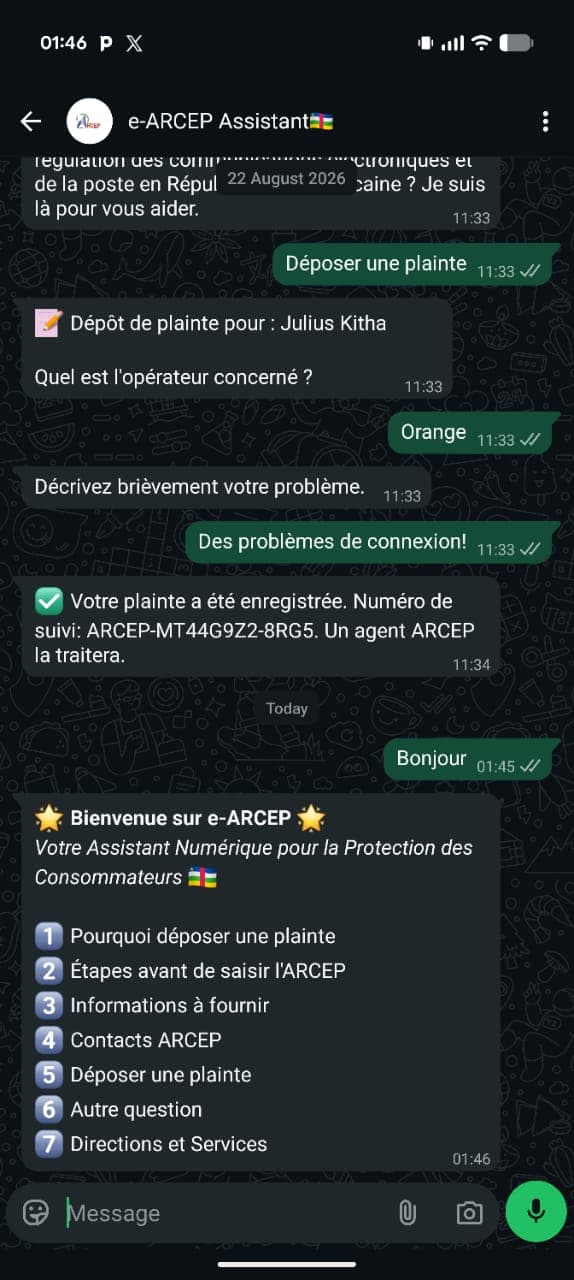
e-ARCEP Assistant WhatsApp conversation — complaint submission and reference number
Why conversational interfaces?

Why conversational interfaces.

Familiar messaging interfaces can reduce friction when people need to access information or interact with a service. They do not guarantee universal accessibility or adoption — but they meet many people where they already are.

  1. 01

    Start where people are

    Reach people in interfaces they already use.

  2. 02

    Guide the interaction

    Provide structured guidance rather than a blank input.

  3. 03

    Capture structured information

    Turn a conversation into a workflow the organization can act on.

  4. 04

    Follow up

    Provide references so people can track what happens next.

Let’s build

Have a public-sector or NGO problem worth solving?

Let's build the technology to solve it.